






Innovative Finance
August 1, 2024


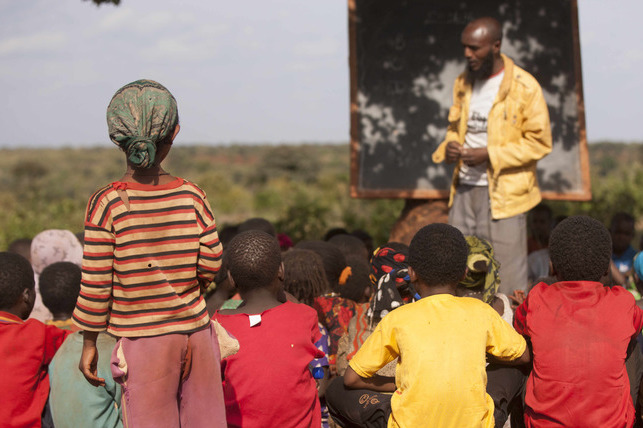
In Kenya, an estimated 2.5 million children aged 4–17 are still out of school (47% girls), including about 707,000 early-childhood learners. The most vulnerable and marginalized children are in the arid and semi-arid lands. In 2023, 57% of 10-year-olds did not meet Grade 3 English reading expectations, indicating high learning poverty. Improving quality and equity in education requires stronger institutional capacity within government systems and schools to deliver effective early childhood and foundational learning.
INSPIRED is a three year program that adopts a systems-strengthening approach to improve foundational learning and early childhood education (ECE) in Kenya, combining policy reform, institutional capacity building, and community-level implementation. Working in partnership with national and county governments, it targets 200,000 children to strengthen early childhood education and foundational learning. The INSPIRED programme focuses on three interconnected areas: strengthening Kenya’s national policy framework for foundational learning through embedded technical assistance; improving the quality of early childhood education (ECE) delivery in Wajir and Mandera by enhancing teacher capacity, school management, and community engagement; and generating robust evidence on effective ECE strategies to inform policy, practice, and adaptive programming.
The program supports the development and operationalization of national education reforms under the Presidential Working Party on Education Reform (PWPER) through technical assistance. It played a key role in the development of the National Foundational Learning Policy Guidelines (2025) and provided inputs to various draft reforms that promote equity and inclusion in foundational learning. At the county level, INSPIRED works directly with the Wajir and Mandera governments to enhance the quality and delivery of ECE services in government-funded ECE centers. Through targeted and evidence-based teacher training, ongoing school-based teacher coaching, and provision of culturally and linguistically relevant learning materials, the program aims to build a skilled teaching workforce and create supportive, inclusive classrooms. Community engagement helps ensure that interventions are contextually appropriate and responsive to the needs of marginalized groups such as girls and children with disabilities. The program also develops an evidence base on effective strategies for high-quality ECE outcomes in low-resource contexts through monitoring and impact evaluations.
Early outputs are strong for a first review period. Seventy-two government officials received policy and systems coaching, a national systems gap assessment was completed, and 63,777 ECE learners are currently benefiting in Wajir and Mandera. Teaching and learning materials (in Somali & Borana languages) were delivered to 571 schools. A total of 2,004 personnel were trained and coached: 1,281 teachers (including 51 teachers with disabilities), 639 school leaders, and 84 sub-county officials (including 4 officials with disabilities). Professional development is improving lesson planning and classroom management, and first-language materials are fostering parental engagement.
Baseline data have been collected to track outcomes. Over the program’s life, anticipated effects include a stronger policy environment, better-supported ECE centers, improved teacher practice, increased school readiness, and reduced gender and disability disparities in access and learning. The establishment of evidence-based ECE models in Wajir and Mandera will generate scalable lessons for other low-resource contexts. Given the early stage and changing operating context, definitive learning and equity impacts will depend on sustained implementation fidelity, government resourcing, and forthcoming evaluation evidence.
The approach used by INSPIRED aligns with global evidence: teacher training paired with coaching and adequate materials improves early learning; policy reform and county-level management are necessary to sustain gains. Strengths include government co-creation, clear governance structures, and a three-pronged classroom model. The program’s integration within existing government systems and alignment with national reforms enable scalability across Kenya, provided sustained political commitment and financing are secured. The robust evidence generation component of the program encourages replication in other low-resource contexts seeking to strengthen foundational learning through policy reform and capacity development.